A sewing robot must handle cloth that bends, stretches, slips, and changes shape under small amounts of force. That makes fashion a harder robotics problem than moving fixed boxes, so the first useful systems will likely work around the sewing station rather than replace it.
- Fabric cutting is easier to automate because the material lies flat.
- Vision systems can check seams, stains, missing buttons, and label positions.
- Sewing remains difficult because soft cloth moves under the needle.
Cutting and sorting come first
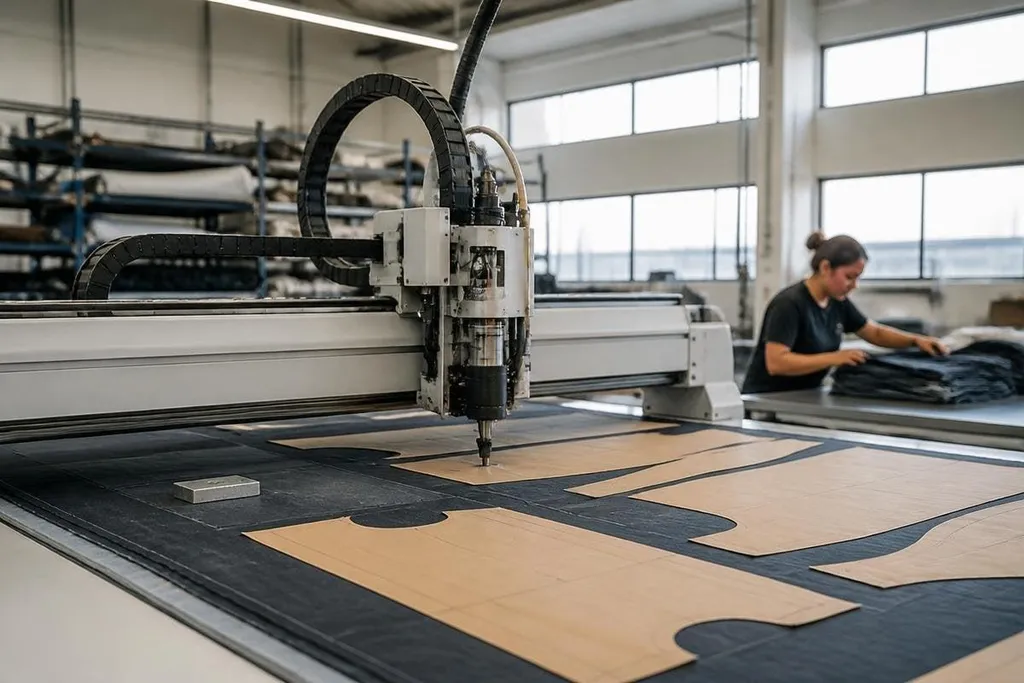
Garment production already breaks into tasks with very different levels of difficulty. A cutting machine can follow digital pattern files while fabric rests on a flat table, giving the blade a stable surface and a clear path.
Robotics can also move cut panels between stations. A camera can read panel shape, color, or printed marks, then a robot arm can place each piece in a bin or on a stack.
Denim, cotton, and leather behave differently, so the gripper must hold each material without leaving marks or stretching the edge.
That last detail matters to a factory manager. A robot that moves pieces quickly but bends a collar or marks leather creates rework, not savings. The useful measure is the number of finished panels that reach sewing in the right order and condition.
Sewing needs touch, not only vision
A camera can find a sleeve panel. It can't tell the whole story once the panel starts sliding beneath a presser foot. The cloth may bunch at the edge, stretch along the seam, or fold when the machine changes direction.
A sewing robot needs force sensing, careful tension control, and software that responds to those changes. Force sensing measures how hard the gripper pushes or pulls. That lets the system adjust its motion instead of treating the fabric like a sheet of metal.
Knitted fabric makes the task harder because its loops stretch. Leather has a different problem: needle holes remain visible, so a bad stitch may ruin the part. These limits point toward smaller tasks such as attaching pockets, sewing straight seams, or guiding material through a fixed machine.
I’d put money on assistive systems before fully autonomous sewing lines. A worker could load the fabric, correct its position, and handle shape changes while the robot repeats a steady motion. That setup still saves effort without asking software to solve every fabric problem at once.
Inspection is a better fit for cameras
Quality checks give robotics another path into fashion. A vision system can inspect a seam for gaps, compare a printed logo with a reference image, or check that a button sits in the expected place.
The system still needs a clear rule for each defect. A loose thread may be harmless on one garment and a reason for rework on another. Lighting, fabric texture, and garment color can also change what the camera sees, so a factory must test the inspection system on its real materials.
These checks place fashion robotics alongside systems that sense materials and move them. Robot24.com robotics coverage can connect those tasks to the machines and work steps being judged. That matters when an inspection result needs to point staff back to a cutting batch or sewing station.
Inspection can also create a record for each garment. A factory may use an item code, image, or machine result to link a defect to a cutting batch or sewing station. That information helps staff find the source of a repeated fault, provided the factory keeps the records accurate and uses the results in daily work.
The factory layout will shape the result
A robot arm does not fix a poor production plan. It needs room to move, a known handoff point, safe access for workers, and parts presented in a repeatable position. Fashion lines often change styles and sizes, which can force new gripper settings and new software for each product.
The cost also includes fixtures, training, safety checks, maintenance, and time spent changing between garments. A system that works on one shirt may need a new setup for a jacket with thicker seams, metal fasteners, or a lining.
The strongest case may come from factories making the same garment for long runs. Short runs and custom clothing need more human handling, so automation has less time to repay its setup work. The best system will be the one that fits the production plan, not the one with the most robot arms.
A practical buying checklist
Use these questions before approving a fashion robotics project:
- Name the handoff: Can a worker or machine place every part in the same position?
- Test the material: Have you run denim, knitwear, leather, and the actual lining used in production?
- Count rework: Will the system record damaged panels, missed seams, and false defect alerts?
- Price the changeover: How long does it take to switch from one size or garment style to another?
- Plan the fallback: Can staff keep production running when the robot stops?
A small trial should measure finished output, rework, changeover time, and worker handling time. Those figures tell you more than a video of a robot moving fabric across a table.
Fashion robotics will grow through narrow jobs: cutting flat cloth, moving panels, checking seams, and feeding repeatable operations. The open question is whether makers can make those systems flexible enough for short production runs without pushing the setup cost above the value of the work.